PRODUCT INFORMATION
Main features
- Powerful CPU: dual-core 133MHz RP2040 processor and 264KB SRAM, 2MB Flash
- Reliable wireless connectivity: uses the powerful ESP8285 Wi‑Fi chip, supporting 2.4 ~ 2.4835 GHz frequency and AP & Station mode.
- Flexibility: compatible with the Thonny editor
- Easy for projects: breadboard-friendly
- Multiple certifications: FCC and CE certified
Description
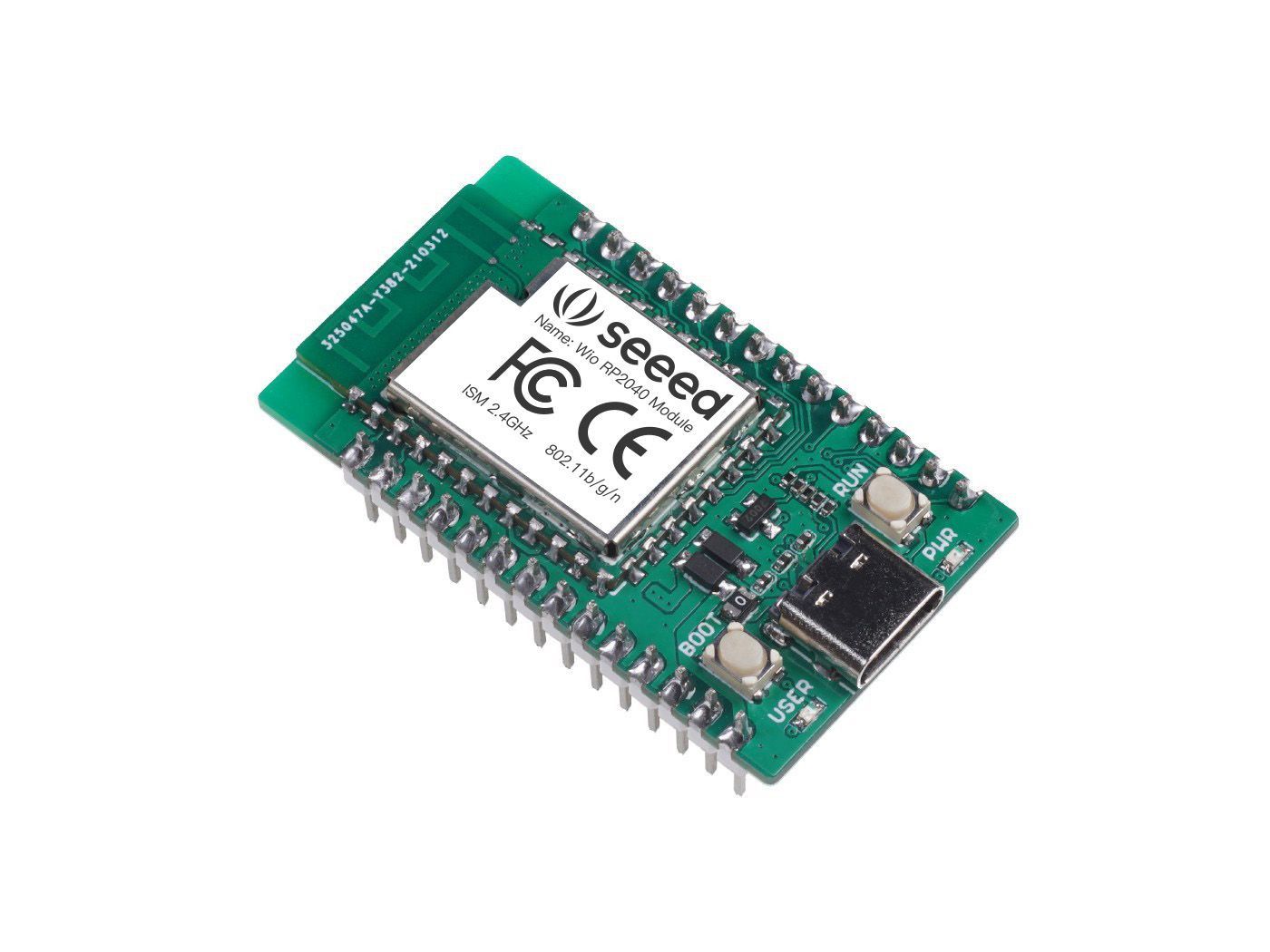
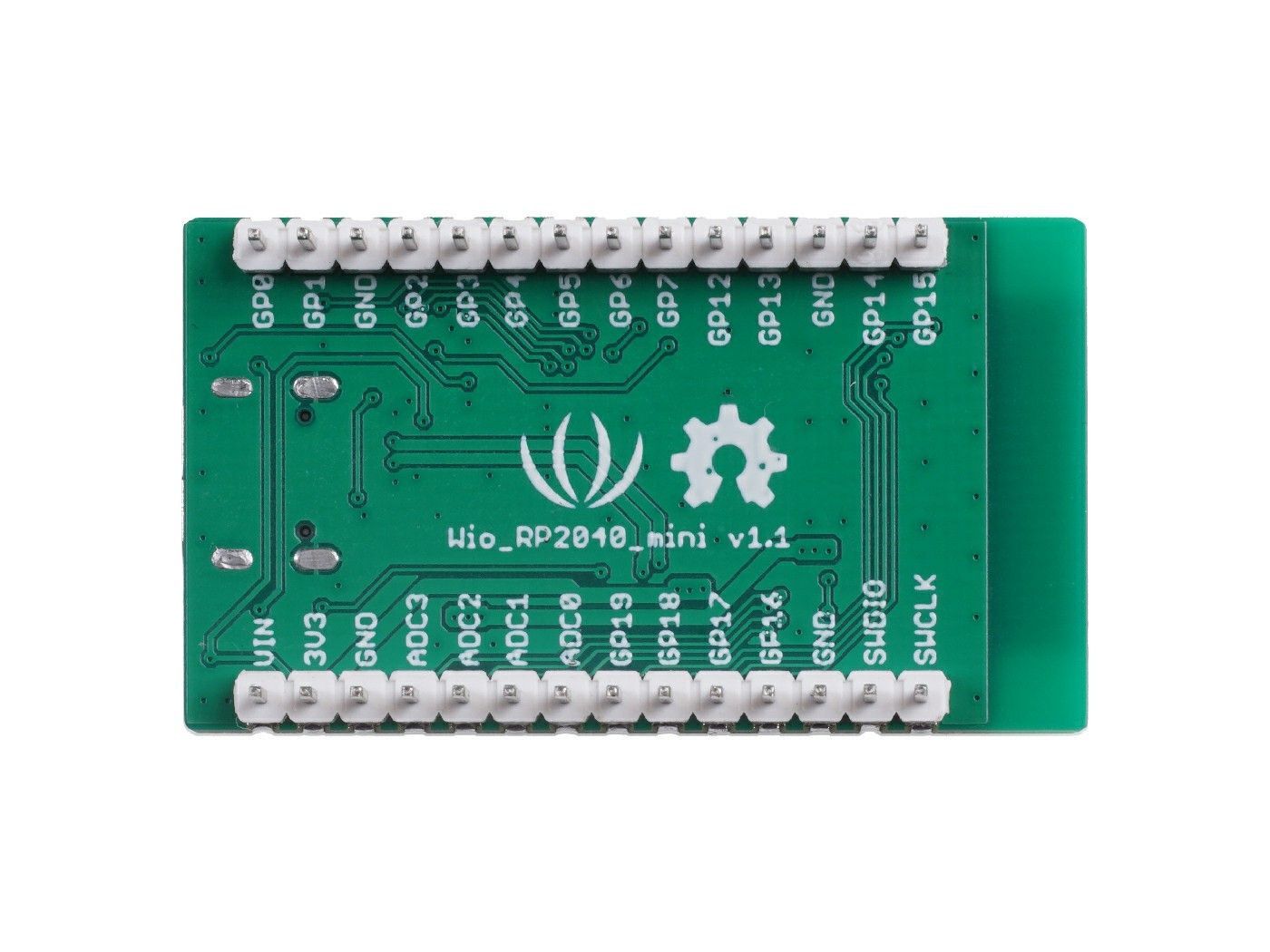
The Wio RP2040 mini wireless development board adopts the Wio RP2040 module. All I/O pins are broken out to pin headers on both sides for easy connection, enabling developers to test and develop prototypes very conveniently. The built-in ESP8285 Wi‑Fi chip can provide stable wireless functions. The development platform supports the Thonny code editor used by the Raspberry Pi Pico, so with just a few simple lines of code you can quickly adapt an existing Pi Pico project into a Pico IOT project!
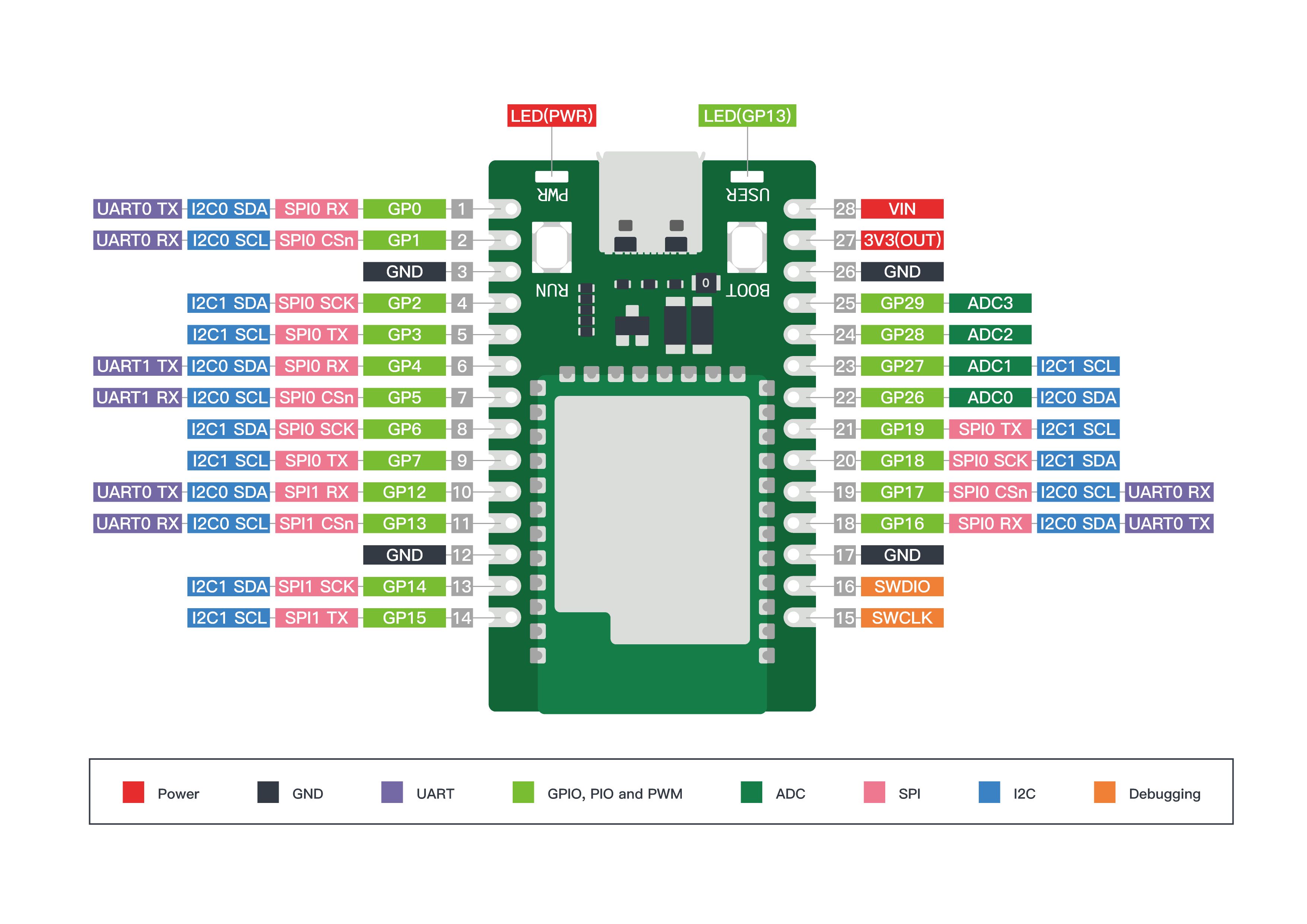
In addition to the RP2040 + Wi‑Fi chip combination, the board offers abundant interfaces, including 28 GPIO pins (19 pins support PIO and PWM), 2 UART, 4 ADC, 2 SPI, 2 I2C. Some pins can be multiplexed, such as GP12 and GP13 with I2C, SPI and UART functions. Therefore more I/O pins and interfaces can be achieved with the 28 GPIO pins. The Wio RP2040 mini wireless development board supports a USB Type-C connector for power and code upload. In addition to the built-in power LED, we also added a user-controllable LED (connected to pin GP13). All models can provide developers with a better debugging experience.
The Wio RP2040 mini wireless development board is fully compatible with the Thonny code editor, which means you don’t need professional electronic engineering skills — you can control hardware just using the simple MicroPython language!
Included are extensive C/C++ support, the official MicroPython port and the Seeedstudio Wio RP2040 Module MicroPython UF2 file! Seeed Studio of course recommends their own Wio RP2040 Module MicroPython UF2 file as they consider it the easiest way to get started, and it includes support for wireless drivers, networking, usocket, and MQTT out of the box, so you can follow our projects and tutorials.
Specifications
- Raspberry Pi Foundation RP2040 microcontroller.
- Two Cortex M0+ cores, up to 133 MHz
- 264 kB embedded SRAM in 6 banks.
- 2 Mb QSPI Flash
- Onboard USB‑C connector for programming
- USB 1.1 Host/Device functionality
- 20 multi‑function GPIO pins
- 2.4 GHz wireless
- Supports IEEE802.11 b/g/n
- Supports 2.4 ~ 2.4835 GHz
- Supports AP & Station mode
- Buttons
- LEDs
- Power
- User programmable LED (GP13)
- Power supply (2 options)
- 5V via USB‑C port (default)
- VIN (5V ~ 3.6V) and GND header pins
- Dimensions: 25.8 x 45.5mm
- Program language support
Applications
- Various Pico projects with wireless functions
- Wireless control, smart home
- Smart toys
Links