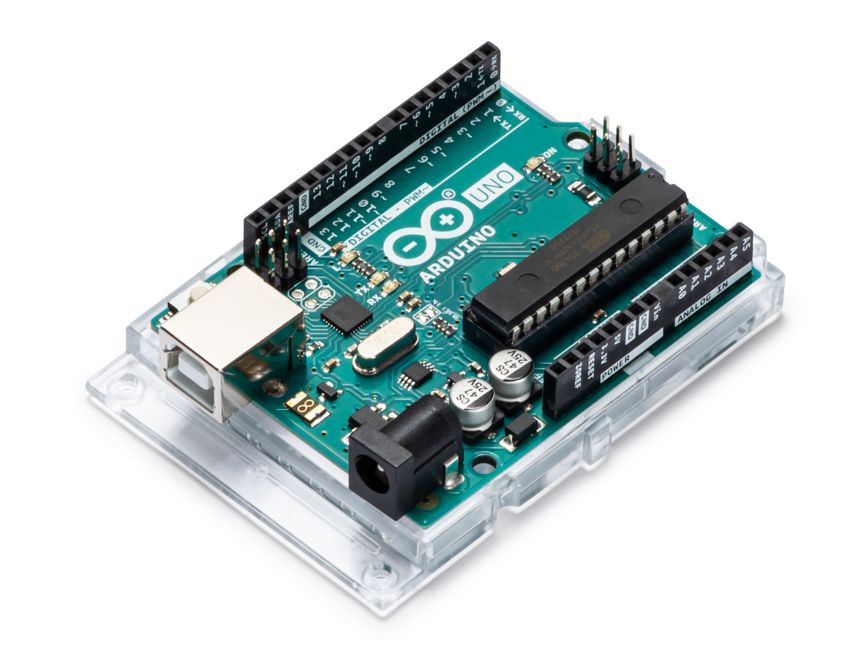
Arduino concept is an open platform for embedded AVR microcontrollers. Getting started is easy. You download the ready development environment (Win, Mac, Linux) and connect the Arduino board to your computer using the USB interface. Lots of examples, ready code snippets and great tweaks. Definitely give it a try.
And above all - ready programming libraries for all of the board’s features and more! You can stack "add-on devices" on top of the board. Ready-made solutions include, for example, Ethernet, Xbee, BlueTooth ...
Briefly about the platform’s technical features:
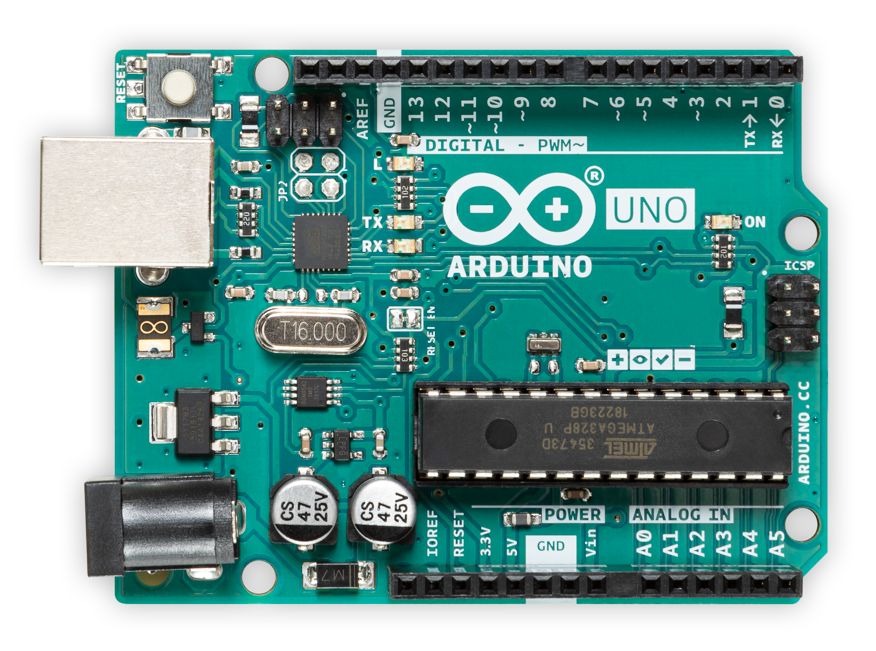
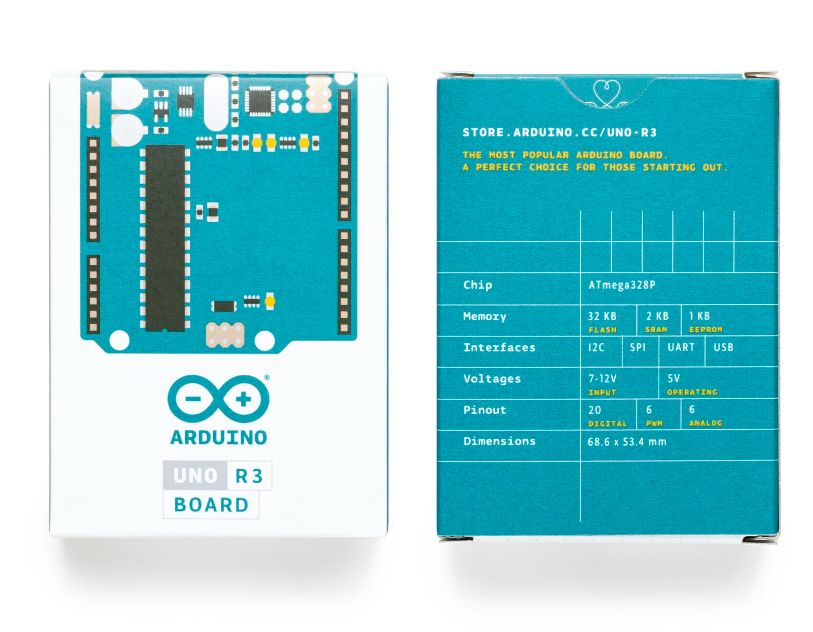
- ATMEGA328 microcontroller
- preloaded Arduino bootloader (2KB)
- FLASH program memory 32KB
- SRAM working memory 2KB
- EEPROM parameter memory 1KB
- 14 digital i/o pins
- 40mA per pin
- 6 pcs PWM outputs
- 6 analog inputs
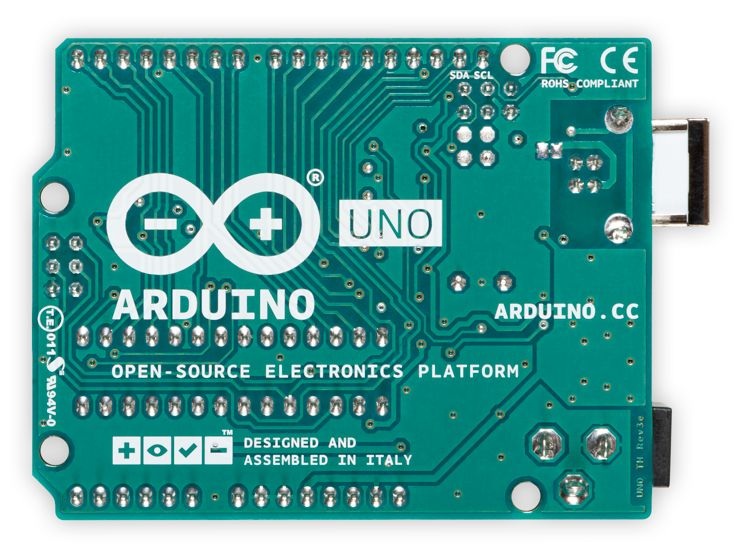
- Pins A4 and A5 also serve as the I2C bus and on the UNO R3 these same pins have been brought to the left side of the board’s top-row pinheader with markings
- 16MHz clock frequency (external crystal)
- reset button
- USB programming interface (ATMEGA16U2)
- auxiliary processor that replaced the previous FT232RL chip
- B-type shell connector
- +5V supply voltages for the board
- program uploading
- also functions as a serial connection to the computer
- additionally its own I2C pins
- ICSP programming headers
- for traditional serial programming of the chip
- 6 pins without series resistors
- the board has a footprint for a corresponding auxiliary processor
- DC power connector (2.1mm)
- input voltage 7-12VDC
- MC33269D regulator provides +5VDC supply voltages for the board (if USB is not connected)
- LP2985-33 regulator provides +3.3V 50mA
- board dimensions 68 x 53 mm (2.7" x 2.1")
Note! The current model includes a base plate.
Guides
Our partner hutasu.net offers an excellent Finnish-language guide to the ins and outs of Arduino. Open and explore the Arduino guide which goes through the features of the Arduino Uno and what you can do with it.